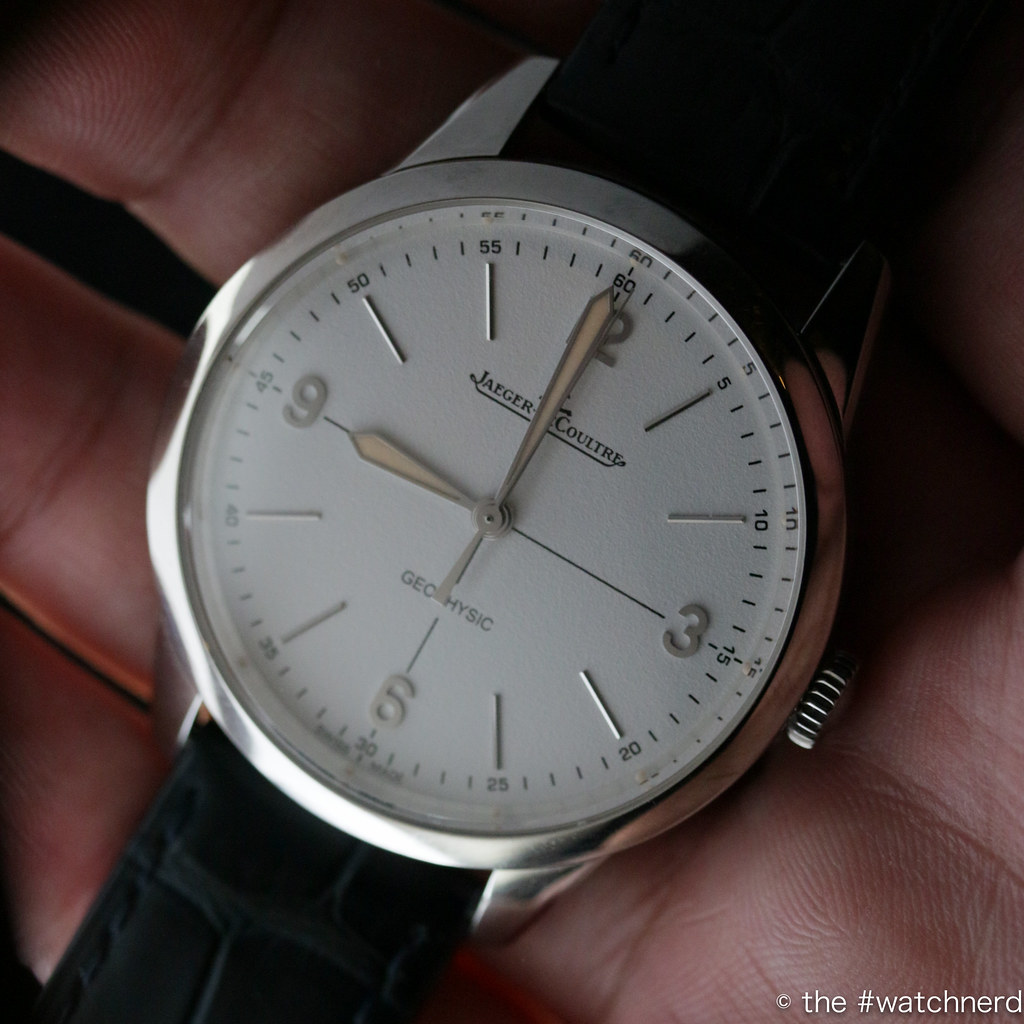
Centuries ago, these firms were already setting the pace for the
progress of the watchmaking industry. Admired by Kings, Emperors,
prominent artists and Popes, these luxury watch brands have been behind
some of the major innovations that allow us to enjoy the incredible
timepieces we have today. Get to know three brands that changed the
history of luxury watches.
Vacheron Constantin
Long before being acquired by the Richemont group, who also owns
luxury watch brands like IWC, Cartier and Baume et Mercier, Vacheron
Constantin (Va-Sher-Own Cone-Stun-Tuhn) was already making history
during the early stages of the watch industry. One of the oldest watch
manufacturers, the company was founded in 1755 by Jean-Marc Vacheron. In
1770, he designed the world’s first engine-turned dials, a milestone
that established Vacheron Constantin as one of the most respected watch
brands worldwide.
The company made it through the French Revolution, after which
Jean-Marc’s grandson decided to export their watches to Italy and
France. To achieve this goal, he partnered with Francois Constantin, who
was responsible for the brand’s name as we know it today and for
expanding it worldwide. Constantin was also the author of the company’s
well-known motto: “Do better if possible and that is always possible”.
Still today, Vacheron Constantin is known as one of the top Swiss luxury
watch manufacturing company, with plants in Geneva and Vallee de Joux.
Many notable celebrities have collected Vacheron Constantin watches,
including Napoleon Bonaparte, the Duke of Windsor, Harry Truman and Pope
Pius XI.

Left: Silver pocket watch signed by JM Vacheron in 1755. Source: http://heritage.vacheron-constantin.com/en2/heritage
Right: Vacheron Constantin watch auctioned at Worthy. Sold for $5,087.50.
Baume et Mercier
In 1830, Louis-Victor and Célestin Baume founded a watch dealership
in Les Bois, Switzerland. Perhaps these two brothers didn’t imagine that
their company would become, decades later, one of the most renowned
luxury watch brands across the world. Although they did have a very
clear goal: to create traditional, high-quality watches, using the
latest technological developments in the industry.
The quest for the perfect watch led the company director William Baume
to join forces with Paul Mercier, despite their opposite temperaments,
in 1918. At the end of WWI, society was facing many changes, and the
watch industry wasn’t exempted. Women’s emancipation created a higher
demand for ladies’ jewelry and watches, which created the need to
miniaturize watch movements.
To overcome challenges successfully, Baume and Mercier divided their
roles, the former dealing with the technical aspects and the latter
taking care of the design. A year later, in 1919, Baume et Mercier (Baum
Ay Mair-Syay) was given the Geneva Hallmark, the highest award for fine
craftsmanship in the watch industry.

Left:
Paul Mercier and William Baume. Right: Yellow gold rectangular watch
featuring typically Art Deco lines, Baume & Mercier museum
collection, 1920. Source:
http://www.baume-et-mercier.com/en/b-m-world/history.html
Girard Perregaux
Perhaps one of the oldest watch manufacturers in history,
Girard-Perregaux (Zhee RAHRD PAIR Uh Go) origins date back to 1791, when
goldsmith Jean-Francois Bautte produced his first watches. Bautte’s
company was the first one in history to manufacture watches in house
from beginning to end, soon became renowned among the celebrities of
that time, like Queen Victoria and other members of European royalties.
Generations later, in 1852 watchmaker Constant Girard founded Girard
& Cie in La Chaux-de-Fonds. The firm would become Girard-Perregaux
following his son’s Constant Girard-Gallet marriage to Marie Perregaux
in 1906. The company had created in 1880 the first ever wristwatch
produced commercially for the public: 2000 timepieces ordered by the
German Kaiser Wilhelm I for his naval officers.

Left:
Wristwatch ordered by the German Kaiser. By Pierre EmD (Own work) [CC
BY-SA 3.0 (http://creativecommons.org/licenses/by-sa/3.0)], via
Wikimedia Commons.
Right: In 1965, Girard-Perregaux designed the
first mechanic movement at high frequency. By Pierre EmD (Own work) [CC
BY-SA 3.0 (http://creativecommons.org/licenses/by-sa/3.0)], via
Wikimedia Commons
Later, in 1970, the company set a milestone in watchmaking history, when
they presented the first wristwatch designed with a quartz movement
vibrating at 32,768 hertz, which was set as the modern quartz watch
movements standard.vedere di piu
replica orologi e
Replica Rolex Daytona II


 Vedi altro